
Comprehensive Low Vision Examinations
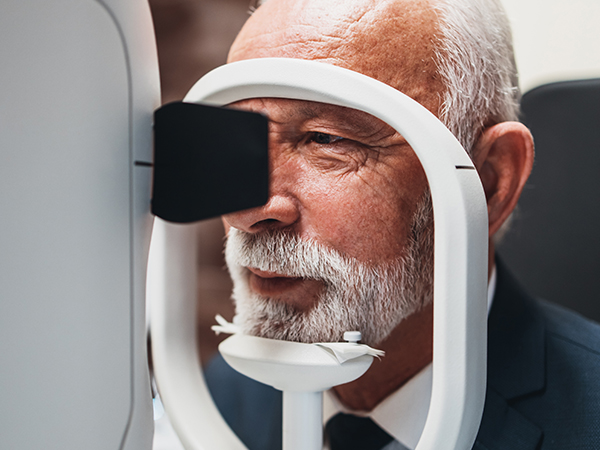
A comprehensive eye health examination is a detailed evaluation of both your vision and the overall health of your eyes. It goes beyond just checking whether you need glasses—it can also detect early signs of eye diseases and even systemic health issues like diabetes or high blood pressure.
Here’s what it typically entails:
1. Medical & Vision History
The exam usually starts with questions about:
Current vision problems (blur, headaches, double vision)
Past eye issues or injuries
Family history of eye diseases (like glaucoma (chatgpt://generic-entity?number=0) or macular degeneration (chatgpt://generic-entity?number=1))
General health conditions (e.g., diabetes (chatgpt://generic-entity?number=2), hypertension)
Medications that may affect vision
2. Visual Acuity Test
This is the classic eye chart test:
Measures how clearly you can see at various distances
Often uses a Snellen chart (letters decreasing in size).
3. Refraction Assessment
Determines your exact prescription for glasses or contacts:
You’ll look through a device called a phoropter (“Which is clearer, 1 or 2?”)
Identifies conditions like:
myopia (chatgpt://generic-entity?number=3) (nearsightedness)
hyperopia (chatgpt://generic-entity?number=4)
astigmatism (chatgpt://generic-entity?number=5)
4. Eye Muscle & Alignment Testing
Checks how well your eyes work together
Tracks eye movement
Detects issues like strabismus (eye misalignment
5. Pupil Response Test
Evaluates how your pupils react to light:
Helps assess neurological function and optic nerve health
6. Slit-Lamp Examination
A microscope with a bright light is used to examine the front of the eye, including:mn
Cornea
Iris
- Lens
This can detect:
cataracts (chatgpt://generic-entity?number=6)
Corneal injuries or infections
7. Intraocular Pressure Test (Tonometry)
Measures pressure inside the eye:
Important for detecting glaucoma (chatgpt://generic-entity?number=7)
Can be done with a puff of air or a probe
8. Retinal Examination (Dilated Eye Exam)
Drops are used to widen (dilate) your pupils so the doctor can examine the back of your eye:
MNB
Retina
Optic nerve
Blood vessels
This helps detect:
diabetic retinopathy (chatgpt://generic-entity?number=8)
macular degeneration (chatgpt://generic-entity?number=9)
Retinal tears or detachment
9. Visual Field Test
Checks your peripheral (side) vision:
Helps identify blind spots
Important for neurological conditions and glaucoma
10. Additional Tests (if needed)
Depending on your risk factors, your eye doctor might include:
Optical Coherence Tomography (OCT): detailed retinal imaging
Fundus photography: digital images of the retina
Color vision testing
Tear film tests for dry eye
Why It’s Important
A comprehensive eye exam can:
Detect vision problems early
Identify serious eye diseases before symptoms appear
Reveal underlying health conditions (like diabetes or hypertension)
How Often Should You Get One?
Adults (18–64): every 1–2 years
65+: annually
Children: as recommended (often before school and periodically after)
More frequent exams if you have risk factors or existing conditions

Contact Information
Office Hours
- Monday 9:00AM - 3:00PM
- Tuesday 9:00AM - 3:00PM
- Wednesday 9:00AM - 3:00PM
- Thursday 9:00AM - 3:00PM
- Friday 9:00AM - 3:00PM
- Saturday Closed
- Sunday Closed
© 2026 Low Vision Specialists. All rights Reserved. Accessibility Statement - Privacy Policy - Sitemap
Powered by:
